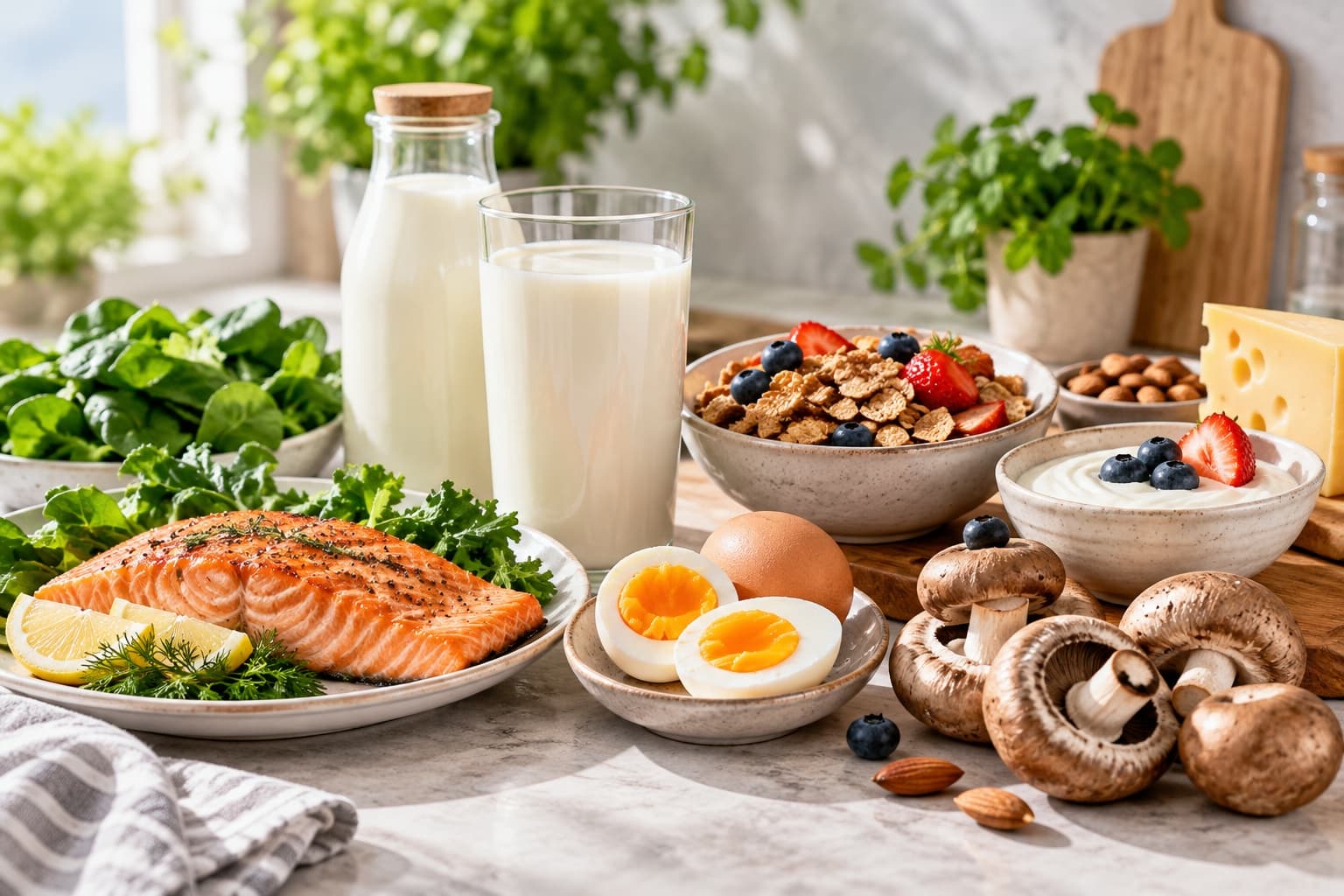
Foods That Help Support Healthy Vitamin D Levels
Learn which foods can contribute to vitamin D intake, including fatty fish, eggs, fortified milk, plant-based drinks, cereals, yogurt, and mushrooms.
About This Topic
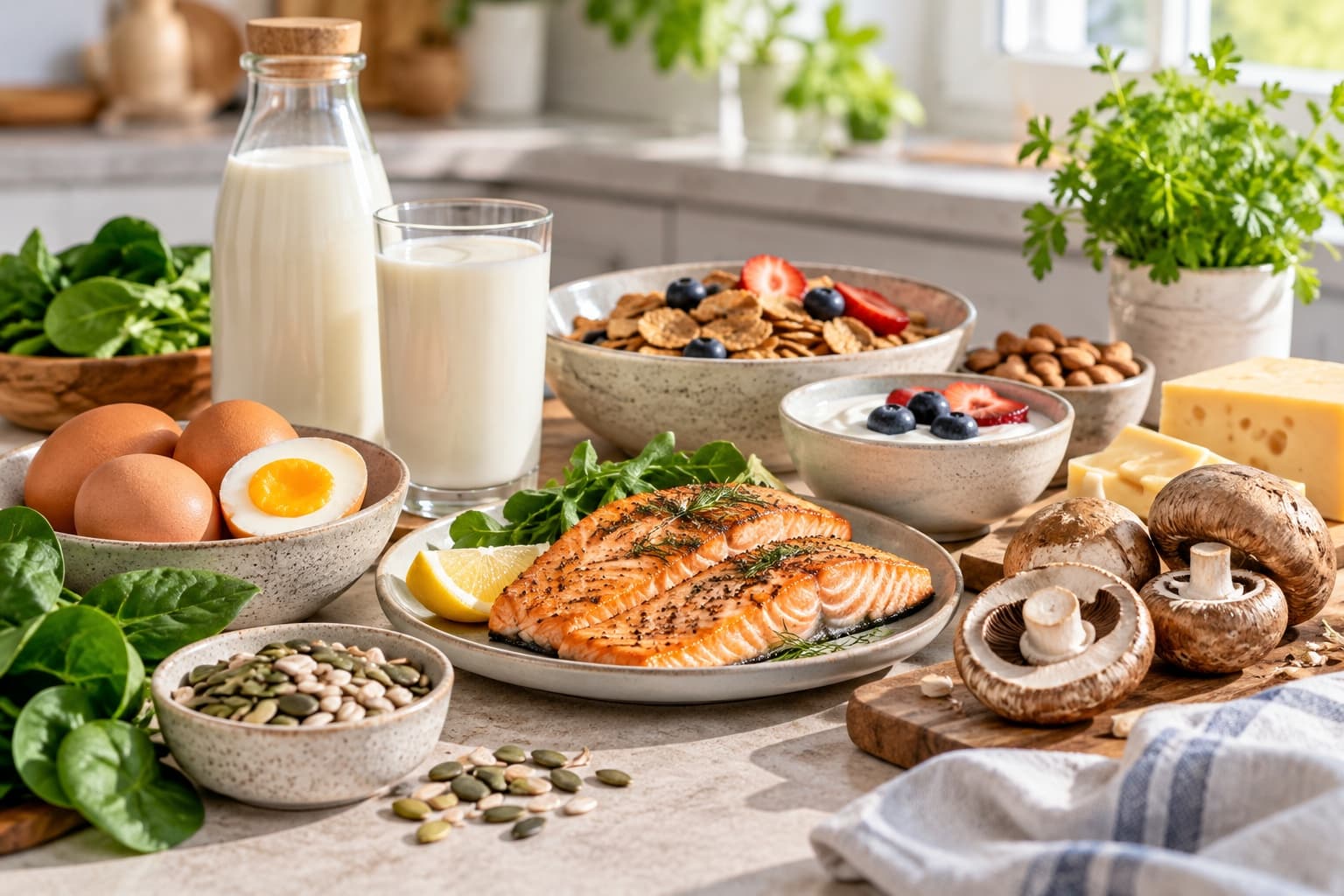
Foods that support vitamin D intake include fatty fish, egg yolks, fortified milk, fortified plant-based drinks, fortified breakfast cereals, some yogurt products, and certain mushrooms exposed to ultraviolet light.
Vitamin D is unusual because relatively few foods naturally contain substantial amounts. Food is only one part of vitamin D status, which can also be influenced by sunlight exposure, absorption, and individual circumstances.
Can Food Help Support Vitamin D Intake?
Yes. Including foods that contain vitamin D can contribute to dietary intake. However, food alone does not determine a person's vitamin D status, and some people may have higher needs or risk factors that require individualized medical advice.
Foods That Provide Vitamin D
Fatty Fish
Fatty fish such as salmon, trout, tuna, and mackerel are among the best natural food sources of vitamin D. They also provide protein and, depending on the fish, omega-3 fatty acids.
Eggs
Eggs contain vitamin D in the yolk. They also provide protein, vitamin B12, and other nutrients.
Fortified Milk
Fortified milk can provide vitamin D along with calcium and protein. Fortification levels vary by product and country.
Plant-Based Drinks
Soy, almond, oat, and other plant-based drinks may be fortified with vitamin D. Check the nutrition label to confirm whether vitamin D has been added and how much is provided per serving.
Fortified Breakfast Cereals
Some breakfast cereals contain added vitamin D. The amount varies between brands, so compare the nutrition label and serving size.
Yogurt
Some yogurt products contain added vitamin D. Yogurt can also provide calcium and protein.
UV-Exposed Mushrooms
Mushrooms can provide vitamin D2, and some products are exposed to UV light to increase their vitamin D content. The amount can vary substantially.
How Much Vitamin D Do Adults Need?
The U.S. National Institutes of Health lists a recommended dietary allowance of 15 mcg (600 IU) per day for adults ages 19 to 70 and 20 mcg (800 IU) per day for adults 71 and older.
Requirements and medical recommendations can differ in particular circumstances. The amount of vitamin D obtained from sunlight is not included in the dietary allowance.
Food, Sunlight, And Vitamin D
The body can make vitamin D when skin is exposed to ultraviolet radiation. How much vitamin D is produced varies with factors such as season, location, skin exposure, age, and other circumstances.
Food therefore remains an important dietary source, especially when naturally occurring sources are limited or fortified foods are available.
Food Vs Supplements
Food can provide vitamin D as part of a varied diet. Supplements may be appropriate for some people, but whether a supplement is needed depends on diet, risk factors, vitamin D status, and individual circumstances. Discuss supplementation with a qualified healthcare professional when needed.
Simple Ways To Include Vitamin D Foods
- Choose fortified milk or a fortified plant-based drink.
- Check breakfast cereal labels for added vitamin D.
- Include eggs if they fit your eating pattern.
- Include fatty fish when you eat fish.
- Choose yogurt products that list vitamin D when available.
- Look for UV-exposed mushrooms when they are available.
Frequently Asked Questions About Foods For Vitamin D
What Food Has The Most Vitamin D?
Among common foods, fatty fish such as trout and salmon can provide substantial amounts of vitamin D. Fortified foods can also provide meaningful amounts depending on the product.
Can Eggs Increase Vitamin D Intake?
Yes. Egg yolks contain vitamin D and can contribute to dietary intake.
Are Mushrooms A Vitamin D Source?
Some mushrooms can provide vitamin D2, especially when exposed to UV light. The amount varies between products.
Can Food Alone Correct Vitamin D Deficiency?
Food can contribute vitamin D, but confirmed deficiency may require professional evaluation and individualized treatment. Do not use food intake alone to assume that a deficiency has been corrected.