Vitamin B12 Foods For Vegetarians
Discover vitamin B12 foods for vegetarians, including milk, yogurt, cheese, eggs, and fortified foods, plus practical tips for meeting B12 needs.
About This Topic
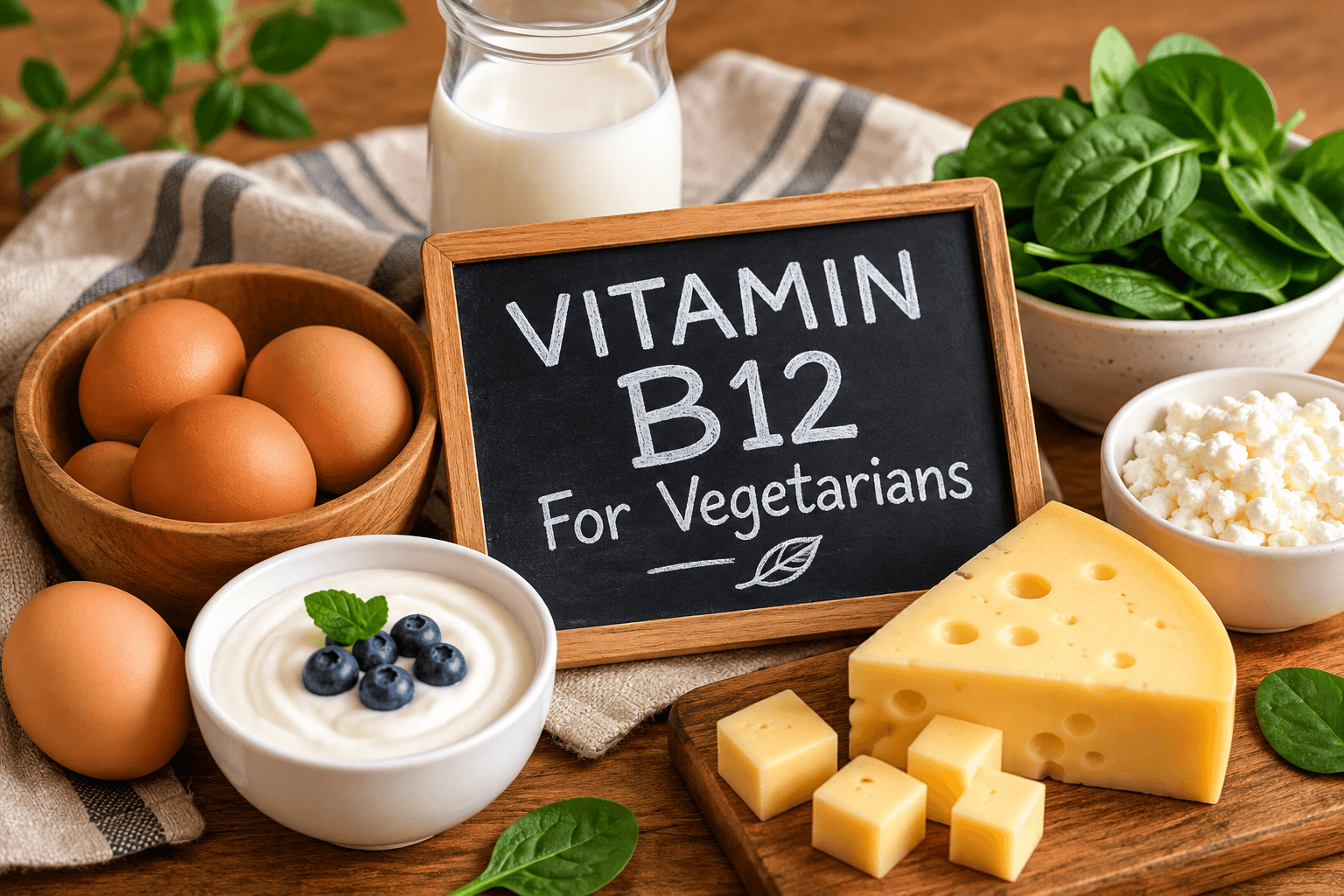
Vitamin B12 foods for vegetarians include milk, yogurt, cheese, eggs, and foods fortified with vitamin B12. Vitamin B12 is an essential nutrient involved in normal red blood cell formation, nervous system function, and DNA production.
Vitamin B12 is naturally found in foods of animal origin. Plant foods do not naturally contain vitamin B12 unless the nutrient has been added through fortification. This makes choosing reliable B12 sources particularly important for people following vegetarian eating patterns.
What Should Vegetarians Know About Vitamin B12?
Vegetarians who eat dairy products and eggs have more naturally occurring food sources of vitamin B12 available than people following a vegan diet. Milk, yogurt, cheese, and eggs can contribute vitamin B12 to the diet.
However, the amount of vitamin B12 obtained from these foods can vary depending on the food and serving size. People who eat little or no dairy or eggs may need to include reliable fortified foods or discuss other sources of vitamin B12 with a healthcare professional.
Milk
Milk is a naturally occurring source of vitamin B12 and can contribute to daily B12 intake. It can be included in breakfast, drinks, smoothies, or other balanced meals.
According to the NIH Office of Dietary Supplements, one cup of 2% milk contains about 1.3 mcg of vitamin B12.
Yogurt
Yogurt can provide vitamin B12 along with protein and other nutrients. Plain yogurt can be included with fruit, oats, or other foods as part of a balanced meal.
The vitamin B12 content can vary between products, so nutrition labels can be useful when comparing different foods.
Greek Yogurt
Greek yogurt is another dairy option that can contribute vitamin B12. Because nutritional content varies between products, check the nutrition label when choosing a specific product.
Greek yogurt can be combined with fruits, oats, nuts, or seeds for a nutrient-rich meal or snack.
Cheese
Cheese can contribute vitamin B12 to a vegetarian diet. Different types of cheese contain different amounts of vitamin B12.
Cheese can be included in meals alongside vegetables, whole grains, or other nutrient-rich foods.
Eggs
Eggs are another vegetarian-friendly source of naturally occurring vitamin B12. They can be included in breakfast, salads, sandwiches, or other meals.
The NIH lists approximately 0.5 mcg of vitamin B12 in one large cooked egg.
Fortified Breakfast Cereals
Some breakfast cereals are fortified with vitamin B12. Fortification means that vitamin B12 has been added to the food during processing.
Because not every cereal contains vitamin B12, check the nutrition facts panel and ingredient information before choosing a product.
Fortified Soy Products And Dairy Alternatives
Some fortified soy products and dairy alternatives can provide vitamin B12. Examples may include fortified soy drinks and other fortified non-dairy products.
Vitamin and mineral levels vary between products, so look for products specifically fortified with vitamin B12.
Fortified Nutritional Yeast
Fortified nutritional yeast can be a useful vitamin B12 source for people who eat little or no dairy or eggs. Vitamin B12 is not naturally present in plant foods, so it is important to distinguish fortified nutritional yeast from products that have not had B12 added.
Check the product label to confirm that vitamin B12 has been added and to determine the amount provided per serving.
Vegetarian Vs Vegan Vitamin B12 Sources
Vegetarians who eat dairy and eggs can obtain vitamin B12 from foods such as milk, yogurt, cheese, and eggs. People following a vegan diet avoid these foods, so their reliable dietary sources generally come from vitamin B12-fortified foods or supplements.
The NIH notes that vitamin B12 is naturally present in foods of animal origin and that fortified foods such as breakfast cereals and nutritional yeast can provide B12 for people who do not obtain it from animal foods.
How Much Vitamin B12 Do Adults Need?
The NIH Office of Dietary Supplements lists a recommended dietary allowance of 2.4 mcg of vitamin B12 per day for adults. Requirements are different during pregnancy and breastfeeding.
Individual nutritional needs can vary. If you are unsure whether your diet provides enough vitamin B12, discuss your diet and any concerns with a qualified healthcare professional.
Vitamin B12 And Deficiency
Vitamin B12 deficiency can be associated with symptoms such as fatigue, weakness, numbness, and memory problems. These symptoms can have many possible causes and should not be used to diagnose vitamin B12 deficiency on their own.
Dietary intake is one factor that can affect vitamin B12 status. Absorption and other health factors can also affect vitamin B12 levels. If you have persistent or concerning symptoms, professional evaluation may be appropriate.
When Should You Discuss Vitamin B12 Testing?
Consider discussing vitamin B12 testing with a qualified healthcare professional if you have persistent symptoms, concerns about your dietary intake, or other factors that may affect vitamin B12 status.
Testing can help determine whether vitamin B12 levels need further evaluation. Food information should not be used to diagnose or treat a medical condition.
Frequently Asked Questions About Vitamin B12 Foods For Vegetarians
What Vegetarian Foods Are High In Vitamin B12?
Milk, yogurt, cheese, and eggs can provide naturally occurring vitamin B12. Fortified breakfast cereals, fortified soy products, fortified dairy alternatives, and fortified nutritional yeast can also provide vitamin B12.
Do Vegetarian Foods Naturally Contain Vitamin B12?
Most plant foods do not naturally contain vitamin B12. Some plant-based foods can provide B12 when they have been fortified with the vitamin.
Can Vegetarians Get Enough Vitamin B12 From Eggs And Dairy?
Eggs and dairy products can contribute vitamin B12, but the amount obtained depends on the foods and quantities consumed. People who eat little or no dairy or eggs may need reliable fortified sources or other guidance.
What Are Good Vitamin B12 Sources For Vegetarians Who Do Not Eat Eggs?
Milk, yogurt, cheese, and vitamin B12-fortified foods can provide options for vegetarians who do not eat eggs. Check product labels for fortified vitamin B12.
Can Vegans Get Vitamin B12 From Plant Foods?
Plant foods do not naturally contain vitamin B12. Vegans generally need reliable fortified foods or vitamin B12 supplements to obtain the nutrient.
How Much Vitamin B12 Do Adults Need?
The NIH recommends 2.4 mcg of vitamin B12 per day for adults. Individual requirements can differ during pregnancy and breastfeeding.